What does Dylan mean, and why does the name feel so calm? Two soft syllables, and you can almost hear the surf. The name comes from Wales, and its story reaches back to old myth. This guide explains what Dylan means, from its roots to its spiritual side.
Parents often ask what does Dylan mean before they pick a baby name. Here you will get the Welsh origin, the Bible and Hebrew answers, and 25 nicknames. You will also find pronunciation tips and a short FAQ. Let’s start with the core answer.
What Does the Name “Dylan” Mean?
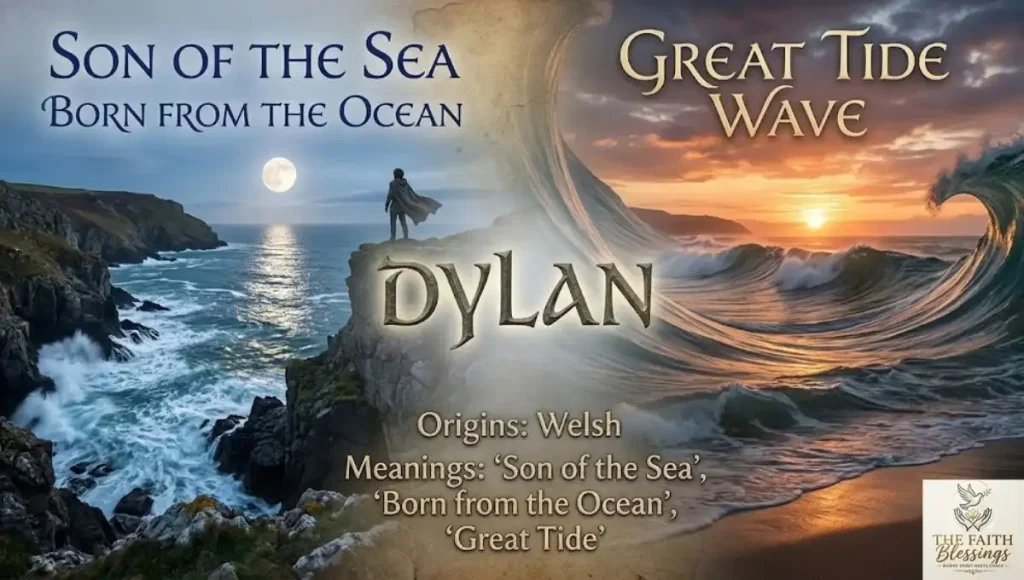
Dylan means “son of the sea” or “born from the ocean.” Some sources translate it as “great tide.” So when people ask what does Dylan mean, the short answer is the sea.
Ask a Welsh speaker what Dylan means, and you will hear about tides, flow, and strength. It is a unisex name, though most people use it for boys. Here is a quick snapshot.
| Detail | Answer |
| Meaning | Son of the sea, born from the ocean, great tide |
| Origin | Welsh |
| Gender | Mostly boys, sometimes girls |
| US pronunciation | DIL-un |
| Welsh pronunciation | DUL-an |
| Common spellings | Dillon, Dillan, Dylon, Dyllan |
That is why Dylan means more than a pretty sound. It carries an image of open water.
The Origin and Definition of the Name “Dylan”
Welsh Roots
Most name experts trace the name to two Welsh words. Dy means “great,” and llanw means “tide” or “flow.” Put them together, and Dylan means “great tide” in a literal sense.
A few older sources link the second part to llan, meaning “enclosure” or “parish.” That view is less common. The sea meaning is the one most references use today.
Dylan in Welsh Mythology
The name appears in the Mabinogion, a collection of medieval Welsh tales. There, a figure called Dylan Eil Ton is born to Arianrhod. His name is often rendered as “Dylan, son of the Wave.”
The story says he took to the sea right after birth. He swam like a fish, and the waves never broke against him. In that tale, Dylan means a child of the water itself.
How the Name Reached the United States
The Welsh poet Dylan Thomas (1914 to 1953) helped carry the name abroad. Musician Bob Dylan, who was born Robert Zimmerman, later took the name as his stage name. Many accounts link his choice to the poet, though he has told the story differently over the years.
Use of the name in the US grew through the later 20th century. It was especially strong in the 1990s and 2000s. Today, searches for what Dylan means come mostly from parents, fans, and curious readers.
Dylan vs. Similar Names
Dylan is often mixed up with look-alike names. Here is how they compare.
| Name | Origin | Meaning | Note |
| Dylan | Welsh | Son of the sea, great tide | Rooted in myth |
| Dillon | Irish | Uncertain, often linked to “loyal” | A surname turned first name |
| Dillan | English spelling variant | Same as Dylan | Less traditional spelling |
| Dylon | Modern variant | Same as Dylan | Rare spelling |
Notice the difference. Dylan means something tied to water, while Dillon has a separate Irish history.
Read More : Tristan Name Meaning in Bible: Discover the Spiritual Roots and Symbolism
Spiritual Meaning of the Name “Dylan”
Water, Cycles, and Renewal
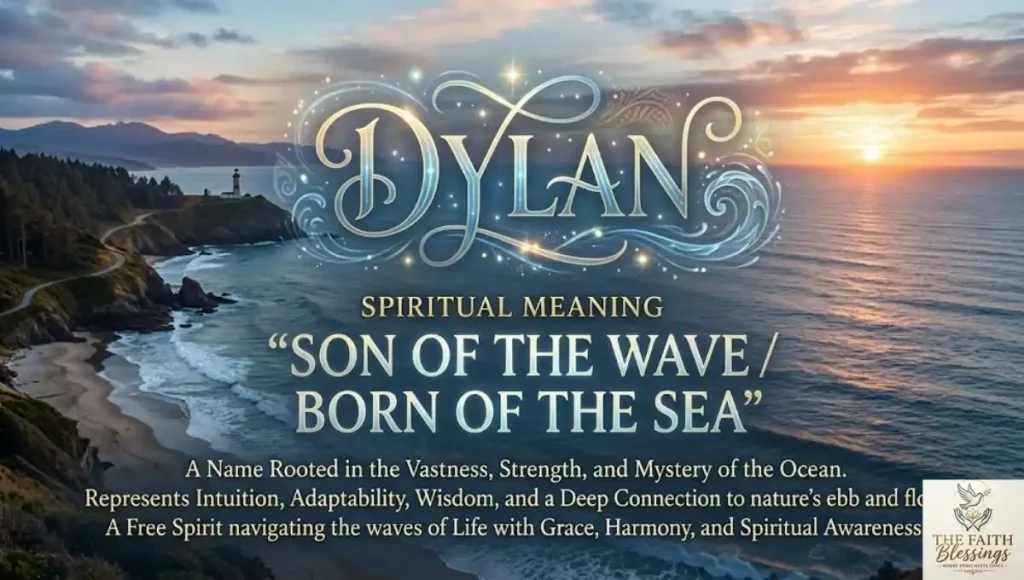
Water is one of the oldest spiritual symbols. It stands for cleansing, change, and life. Spiritually, Dylan means movement and renewal.
People who study names often say Dylan means emotional depth. The tide comes in, goes out, and always returns. That rhythm fits ideas about resilience and starting fresh.
Numerology and Personality Traits
In Pythagorean numerology, the letters in Dylan add up to 20. That reduces to the number 2. Number 2 is tied to balance, cooperation, and sensitivity.
Name lore often links Dylan with these traits:
- Creative and expressive
- Calm under pressure
- Loyal and caring
- Independent and curious
- Drawn to nature and music
If you want to know what Dylan means spiritually, treat these ideas as inspiration. They are modern beliefs, not religious rules.
What Is the Meaning of “Dylan” in the Bible?
Many readers ask what Dylan means in the Bible. The honest answer is that Dylan means nothing in scripture, because the name never appears there. It is Welsh, and the Bible was written in Hebrew, Aramaic, and Greek.
Still, the sea matters a lot in biblical stories. Psalm 107 describes sailors seeing God’s works in deep water. In Mark 4, Jesus calms a storm on the Sea of Galilee. Some families like Dylan for that watery imagery of power and peace.
25 Popular Nicknames for the Name “Dylan”
Short forms keep what Dylan means alive in everyday speech. Here are 25 you can try:
- Dyl
- Dy
- Dil
- Dill
- Dilly
- Dylie
- Dylz
- Dyl Pickle
- D-Man
- DD
- Lan
- Lanny
- Lano
- Dylo
- Dyl-Dyl
- Little D
- Dyldo
- Dylbo
- Dilly Bear
- Tide
- Wave
- Skipper
- Captain D
- Dylan-o
- Ocean Boy
Names like Tide, Wave, and Skipper nod to the sea meaning. Dyl and Dilly are the easiest everyday picks.
The Meaning of “Dylan” in Hebrew

Dylan has no Hebrew meaning. So what does Dylan mean in Hebrew? Nothing, because the name is Welsh. A few baby-name sites show a Hebrew spelling, but that is only a transliteration of the sound.
If you want a Hebrew name with a similar feel, try these:
- Yam: means “sea”
- Gal: means “wave”
- Galya: means “wave of God”
They match the ocean spirit of Dylan without claiming a false link.
Is the Name Dylan in the Bible?
No. You will not find Dylan in the Old or New Testament. Whatever Dylan means in other languages, it has no biblical entry.
Some biblical names do connect to water. Moses is linked to being “drawn out” of the water. Noah is tied to the flood story. Families who want a faith-based choice with sea symbolism can look there.
Dylan Name Pronunciation
In the US, most people say DIL-un. The first syllable rhymes with “pill.” The second is a soft “un.”
In Welsh, it sounds closer to DUL-an. The Welsh y is a softer, schwa-like sound. Both versions are correct in their own setting.
A few quick tips:
- Stress the first syllable.
- Keep the second syllable light.
- Do not say “DY-lan” with a long “i.”
Whether you say it the US way or the Welsh way, Dylan means the same thing.
Frequently Asked Questions
What does Dylan mean?
Dylan means “son of the sea” or “born from the ocean.” Some sources also say “great tide.”
Is Dylan a boy or girl name?
It is unisex, but it is used mostly for boys. Use for girls is growing slowly.
What is the origin of the name Dylan?
Dylan is Welsh. It comes from dy (“great”) and llanw (“tide” or “flow”).
What does Dylan mean spiritually?
Spiritually, Dylan means renewal, emotional depth, and the flow of life. These ideas come from water symbolism, not from a religion.
Is Dylan in the Bible?
No. The name does not appear in scripture. It is a Welsh name.
What does Dylan mean in Hebrew?
Dylan has no Hebrew meaning. Hebrew names like Yam (“sea”) and Gal (“wave”) carry a similar idea.
How do you pronounce Dylan?
In the US, say DIL-un. In Welsh, it sounds closer to DUL-an.
Is Dylan still popular in the US?
Yes, it is still widely used. It was at its strongest in the 1990s and 2000s and has eased since.
Who are famous people named Dylan?
Welsh poet Dylan Thomas and singer Bob Dylan are the best known. Actors Dylan O’Brien and Dylan Sprouse are also familiar names.
Conclusion
Now you know what Dylan means. It is a Welsh name that means “son of the sea” or “great tide.” Its roots go back to the Mabinogion and a child who belonged to the waves. That mix of myth and meaning is why the name has lasted.
Spiritually, Dylan means change, calm, and renewal. The Bible does not mention it, and Hebrew has no matching word. Still, sea imagery runs through scripture, and Hebrew names like Yam and Gal echo the same spirit.
If you are weighing the name, say it aloud a few times. Try a nickname or two and picture it on a birth certificate. Dylan means something real, and it sounds friendly in almost any setting.
Have a favorite nickname or a story behind your Dylan? Share it in the comments, or save this guide for your next name list.

Welcome to Thefaithblessings ! I’m Hasnain Raza.Christian Faith Writer | 6+ Years of Bible Study Experience | Founder of Thefaithblessings .comSharing powerful prayers, heartfelt blessings, and inspirational Christian messages to strengthen your faith and bring you closer to God.